
Interview with Florencio Travieso : Swiss blade Students and Diplomacy over War
Eloise ROUGER
“We don’t want answers, we want good questions,” pronounced Florencio Travieso during his interview with a member of the press team in ILYMUN 2026. He gave us insight on students aspiring to have a career in international law and in international organisations, valuing the innate curiosity of the highschoolers in ILYMUN as well as their understanding of others. Our Secretary General Paul Emile Berthodin also stressed the importance of this in his opening speech : the need to understand, or at least being open to understanding, why and how totalitarian, oppressive dictators lead their countries in an oppressive manner. The key to international cohesion and peace is, according to our valued guest, understanding and communicating with others without resorting to the disastrous fallback of war.
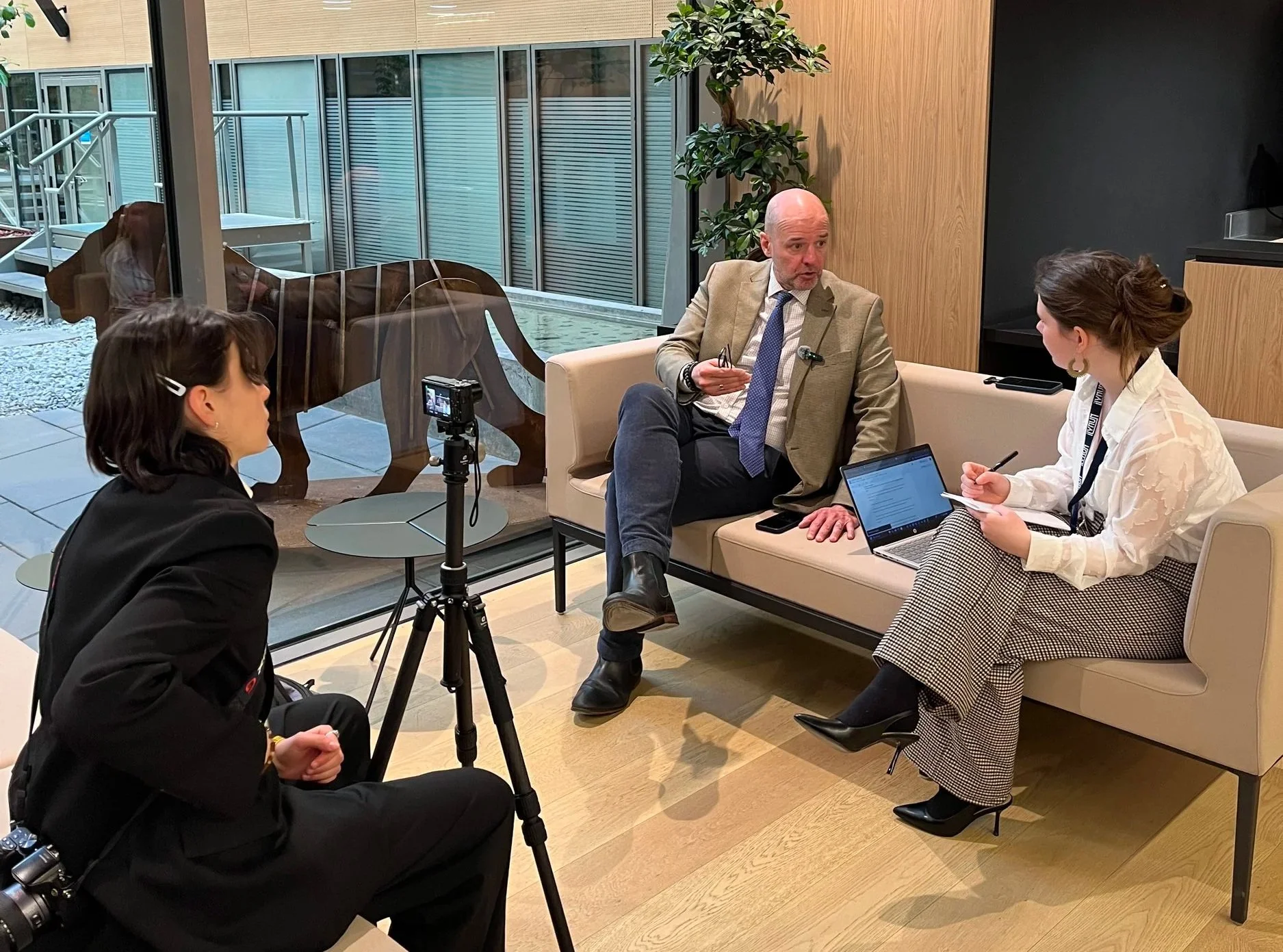
Florencio Travieso believes that ILYMUN participants should be like “swiss blades”, pluridisciplinary, with knowledge on XIXth century cinema as well as the hottest geopolitical events. Pluridisciplinarity goes hand in hand with curiosity, a top quality mentioned earlier. Indeed, an interest in politics as well as culture enables a better global world view and a better understanding of the country sitting opposite from you on the negotiation table. The business professor or EMLYON would even go to say that this openness is the quality that is sorely lacking in current state representatives today. For example, Donald Trump’s empathy deficit has led the whole Middle East to a deadly war. Paradoxically, this attack was planned during diplomatic and constructive negotiations with Iran, and war was hence unwarranted from the perspective of our guest speaker.
Florencio Travieso values a middle ground in negotiation and would like to abolish the labels of “right” and “wrong” in global politics. For him it is important to be accepting of different perspectives in international law especially. Furthermore, communication and empathy or “emotion” in international law is key, leading to a humanisation of the legal sphere and helping keep track of the rights of those who need to be protected : civilians. When asked about this question in relation to the war in Iran, he criticised the current American president's fallback of war once again, blaming this recourse on a severe lack of “international openness and awareness" as well as empathy for Iranian civilians. Also, when asked what course of action he would have taken instead of war and how to end it, he states: “to end this is to not start this”, placing once again immense importance on international diplomacy and open conversation between states.
The topic of AI was also evoked and the possibility of EU measures to be put into place to limit its negative side effects. While addressing the importance of European measures to combat this issue, he also underlined the importance of user ethics and responsibility. In fact, he underlined the importance of legislation such as the EU AI Act that aims to keep humans involved as much as possible (not the numerisation of ethics) to prevent “black boxes” that exclude humanity from the AI equation.
Florencio Travieso is incredibly hopeful for the future of diplomacy and especially the future of international law as he watches this conference unfold because he views ILYMUN as a direct portrayal of curiosity in younger generations and a mass mobilisation in favor of resolving global issues. Furthermore, despite the rise of AI and the dehumanisation of war and politics, the sensitivity and openness demonstrated by the five hundred students’ participation in this conference is telling of a breakthrough in future diplomacy.