
The Future of Women’s Protection Rights - Interview with Sarah Blin
Addressing protection rights and care work for women
Sarah Collin
“Don't be fooled by the big names and the status and the prestige” affirmed UN Women consultant, Sarah Blin when asked about the United Nations’ place in society by our press member Sarah Collin.
Sarah Blin is an Independent consultant and expert on social policy, humanitarian and development aid with a focus on social protection rights, the role of the social service workforce, gender and disability. She takes a particular interest in unpaid care work for women.
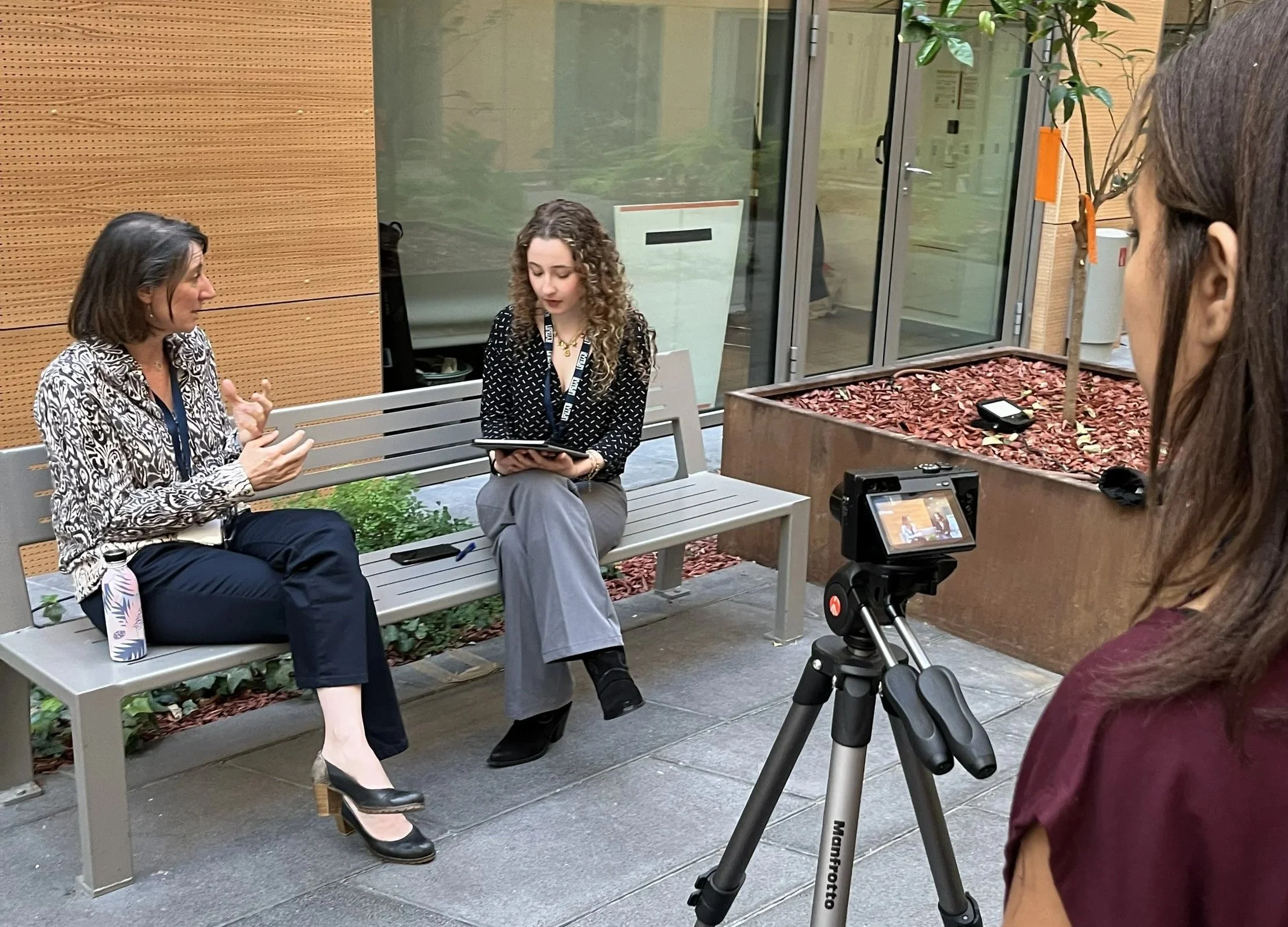
Are countries really aware of issues like unpaid care work and the changes that need to be addressed so that improvements can be made? Do they need more information or people like you to help them make the improvements?
I think very few countries are aware of this. Very few countries have ever thought about the value of the work that women do at home. Of course, as individuals, they all know that it's the women in the home that do all this work. But because many policymakers are men, and they've never done it themselves, they don't necessarily understand how difficult it is. Also with climate change, this work is becoming even more difficult because it takes way longer to find water, to get the woods, if your house gets flooded, then you've lost all your assets and it has all this impact on them. I think what strikes me is when you explain it and especially if you bring that economic argument, yes, they understand it and they can see the logic, but the step from that to changing policies, that takes a very long time.
For me, it's what's very attractive about talking about women's rights from the perspective of care, is that rather than just say, "Oh, we are all equal," actually it says, "Well, if we were truly equal, then the work that women do at home should be recognized in GDP." There should be more technologies to alleviate the difficulties of this work, etc. And so it really provides a practical translation of women's rights and I think that's why I like this decision that was taken in the Inter-American Court of Justice that care is a human right and this way you can unpack these women's rights as something more concrete in the lived experience of women.
What is the mission you are most proud of and why was it so successful?
Maybe to bring it home and to Lyon because you know Lyon hosts many NGOs and one of the most prominent NGOs in New York is Handicap International. So I work for Handicap International in Nepal. I mean it's not my work, it's the work of my team, but in Nepal we were able to radically change the way persons with disabilities were
portrayed in law and the services that were provided to them. I mean, we were helped by the earthquake because when the earthquake happened, all this work that we had been doing with social services, with the hospitals, on access to physical rehabilitation,
all the work that we've done on social protection, suddenly all this mass of people became disabled by the earthquake and they realized that they needed these services that we had been advocating for. And so, yeah, it's one of my true achievements that my team has really persistently pushed for and that's really achieved.
What are things you would have done different looking back at yourself at the beginning of your career now that you gained experience?
I think I would have been way less colonial had I known that I was being colonial. But yeah, there's a problem. What do you mean by being colonial? Well, you know the architecture of AIDS has been a lot about the whites, what we call the white savior. So, you know, all these white people come and help these poor starving Africans. And I think the bottom line is, yes, we all want to be, I mean, those of us who do this work, we do it because we are touched by Africans, by this vulnerability that we see and we want people to enjoy the same well-being as us. And so it comes from a really deep human sentiment, shared sentiment. And the problem is that when this is translated in big organizations and when you know where the money is coming from and how it flows from top to bottom and how we don't listen enough to these voices. Yeah, I think I've always felt that there was something not quite right. I mean, what I like about my work is being in these villages and hanging out with these women. That's really what I like doing. But when you become a country director and you have to sign off budgets and hire and fire people, you're in a position of power that reflects wider power dynamics. And I think at times I was attracted by this power and not fully aware of why I was truly doing this and how I could do it in the most meaningful way.
How do we move women from ‘inactive status’ into ‘active participation’ considering the high number of women not taken into account with unpaid care work?
There are many mechanisms that can be used, especially through non-state organizations. So all the community groups that can help women work together and have a collective voice. There's a movement of domestic workers that started in Latin America that is now a global movement. There's an international federation of domestic workers. There's also an organization called WeGo that works for women in the informal sector. So all these movements that bring women together really help
hear their voice and many of these women are not necessarily educated, they don't have constitutional law degrees or anything like that. But by working together they can also pull in these experts that can help translate what they have to say, what they need and what they want into legal or policy changes and transformation and that's the power of working together and collectively.
Women with disabilities are often doubly invisible in the labour market. What legal protection rights are missing that would allow them to enter the labor force safely and benefit from basic protection rights?
The marginalization that persons with disabilities face and the one that women face, are caused by the same mechanisms of how power is exercised. Who has power? Who holds power? It's linked to the patriarchy, it's linked to notions of worth and worth in society. And so of course when you're a woman with a disability you have this double negative exercise of power on yourself.
To me, for changes to happen, you always need to work at the policy and legal level because it's in that sphere that you can truly talk of your principles and shared goods and shared social visions. But then you also need to work at the ground level. The voices of these people need to be heard, their experiences need to be heard, and they need to be given the possibility of acting in their community. And marginalization is not just in legal rights, it's in your everyday life, in your village, in your household.
Sometimes, or in my experience at least, we need catalysts. And NGOs and the UN, we're often criticized for being colonial, and it's true. But when we're not colonial, we're also sort of third parties and catalysts that help with these connections.
Nobody has found the answer, that's the truth. But the more we have women visible and women with disability visible in public space and we hear them talk
the more we will be able to see that we are all the same and we all have our diversity and our uniqueness and that's what builds society
If you had one minute to address the UN general assembly today, what would be your ‘call for action’ regarding the link between social protection and the economic empowerment of women?
I think my recommendation to the Assembly is to give a lot more consideration to care work and its economic and social role and to recognize care as a human right, both the rights of care providers, of care users and the right to self-care as well.
How can we better empower women’s organisations especially in places like Nepal where women might not even be aware of their international rights, to define their own labour and protection needs?
I think it's an interesting question and often the debate has been put in this way, you know, they don't know but we know, we are the informed elite.
But we've moved on a little bit from this, although of course it's a back and forth movement. I think that Latin America has been an amazing leader in helping local voices rise up. I mean first with the farmers movements in the 60s and 70s and then women's rights. But I think it's again about this role of being a catalyst for these voices, not having an attitude of "I know for you, I know you have this right and I'm going to..." but it's saying, well, you know, we've all moved from situations of oppression to situations of liberation and these things are never a given. They're a constant struggle wherever you are. We see now how in some countries in France and in the US, there are many years that have been taken away from us with this new administration, years of gains in women's rights and gender justice. The assertion that you have rights in themselves is incredibly important and that they are universal. And it's true that women in Nepal may not know this and that it's important to tell them that they are part of a collective that has asserted these rights as basic human rights. And then from there, what do these local voices say and how do you, what are the parameters of their experience of their rights? And then we can work together and advance that.
How can UN women better integrate mental health and psychosocial support into the ‘right to work’ framework?
Yeah, I mean I think more generally if we circle back to the question of care, I think one of the services that is seldom available in southern countries, in the global south as we call it, is mental health services. It's a profession that is not very developed. It's becoming more and more available, but mostly in urban settings. But I think, yes, we should probably promote a lot more mental health services, the social work profession. One of my areas of interest in social protection services is we focus a lot on financial support to families and individuals, but actually the social service workforce, they're the professionals who do this work, and there's not enough attention paid to them and how their relational support functions. They come and visit families and they see whether a woman is being a victim of domestic abuse, or at least they can see at least. Even if they come to provide a financial benefit, they are there and they can be a witness to other issues in the household and use their knowledge of other services to help these women have the support that they need.
Can you tell us about your educational background and the path that led you to this position you are in today?
So in my days there was very little on offer. I was educated in France and there was very little on offer and so the only school that was available was called ISTAM and it's a great school actually now it delivers engineering degree but I became an agronomics engineer but it was specialized in tropical agriculture so you know this was the old mindset that you go and teach these poor Africans how to farm they already knew how to farm but we thought we could bring this technology. I moved on from that very quickly, I have a master in anthropology of development. That's what I was interested in the human dimension of things and this I did in London at the School of Oriental and African Studies, and then after that when I moved more into policy. I trained in public administration, labor migration, social protection, I did many specialist diplomas after that and so I think anybody who's interested in political science and economics, especially now that the world is so globalized. You don't really need to particularly specialize early on in a given field, but more really understand those dynamics of power and policy making.
What is a piece of advice you would give to future generations who want to work in international organisations like UN women?
Don't be fooled by the big names and the status and the prestige, I think. These organizations are made of human beings and they are weak or as weak as the human beings that compose them. What counts is that you need to be fueled by
this concern for equal rights and for social justice in order to do this work well.
It's this energy that will make these organizations better organizations and do their work well. Those are not practical tips. If you want practical tips, which university degree to have and all this, that's another conversation. But at least for me, that's the message
How can young people contribute to the goals of UN Women and help advance women’s rights?
I think maybe start having conversations amongst yourselves. How do you experience this question of gender justice and of women's rights? What do you see around you at school, at university, in society? Pay attention to these things. You might find that they're a given, but nothing is a given in this society. Everything is to be gained, to be changed, to be transformed. Listen to yourselves as boys and girls, how do you relate to each other and what does this mean in terms of the social relationships that exist in society. And then at the conference talk about care and put care on the agenda.