
Advocacy in Motion: Speaking for the Vulnerable - Interview with Luellen Delorme Kazan
Garance Leblond
Luellen Delorme Kazan is a Senior Humanitarian Advocacy Advisor. Alongside her colleagues, she works in countries affected by crises with the objective of understanding the dynamics and the needs of people affected by conflict, displacement, or humanitarian emergencies in order to be a voice for communities in need. She works in many different organisations like the United Nations, where she tries to influence political decision makers with the hope of helping vulnerable groups regain their basic rights and find security in their living place.
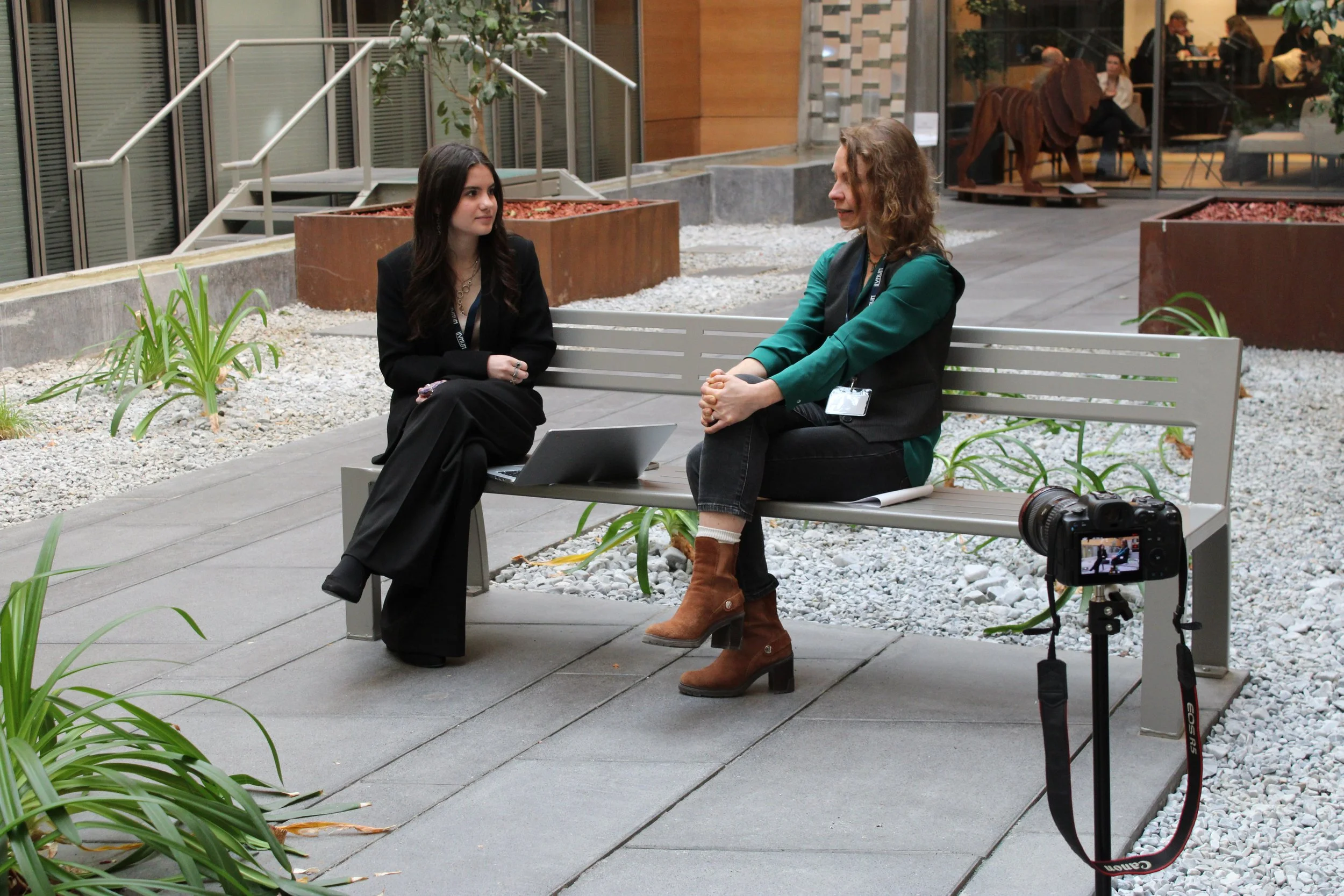
Garance: What motivated you to take this career path, what is the most rewarding part of your job?
Luellen Delorme Kazan: I have lived around the world. In Colombia, in Senegal, in the Democratic Republic of Congo, that’s been a great privilege and through those different experiences, I have seen how much it matters what political leaders decide and act upon and so, I found myself lead to the work of humanitarian advocacy.
Advocacy is a long game. But it’s always very rewarding when I can see that the voice of people which I try to represent is able to be transmitted to a platform like the UN security council where even if not always,once in a while a change is made. While it doesn’t happen everyday or even every year a big decision made there can have a long term, lasting change that’s needed for sustainable support to people’s lives becoming better.
Garance: What are some of the biggest issues in the Humanitarian world today?
Luellen Delorme Kazan: Well, there are so many. The crisis in Sudan is on an astronomical scale in terms of hunger and protection as well as so many other things. The number of people in need of assistance is huge. We see enormous issues with protections, violence and hunger all around the world; in the Democratic republic of Congo, in Haiti… Huge displacement is happening in South America in relation to Venezuela and of course, war in the middle east is escalating and creating more displacement, more issues with security and protection. I would say that one of the biggest issues is geopolitical dynamics and proxiwars that are taking place between and amongst world powers that are not acting on the behalf of people’s basic rights and needs. This lack of political will to protect civilians around the world is a huge issue.
Garance: Over the years, how has your approach towards this work changed?
Luellen Delorme Kazan: I think that while I am still so inspired by my work, I do also see its limitations now that I have been in this field of work for some time. I feel like carrying on and staying hopeful as well as recognizing positive movements on all levels is just so important. I really believe that acknowledging the critical importance of the grass roots humanitarian action and advocacy that’s taking place is something that remains even more important for me today than before.
Garance: What is the process of settling disagreements amongst organizations?
Luellen Delorme Kazan: Well, fortunately, we do have international laws and norms to guide us. In advocacy, we try to stick to those, to use them to help us navigate the responsibilities of member states. When there are disagreements, one of the most important things that we can do is try to navigate tactfully, to understand the interest and priorities of each stakeholder and work to find common objectives; places where different stakeholders can agree.
Garance: How has humanitarian advocacy affected the way you see the world around you?
Luellen Delorme Kazan: I have a lot of gratitude for the simple things knowing that it is so hard for a lot of people in this world. It has certainly given me the skills to understand a number of different perspectives and the importance of trying to put ourselves in the shoes of others because judgement and condemnation truly doesn’t get us very far.
Garance: What skills do you think are the most useful in your field?
Luellen Delorme Kazan: It takes a certain fire, it’s not always easy to be in this field. One might have to go far away from family and friends to be in uncomfortable situations, or to delay plans such as starting a family. I think that it sometimes is a challenge to balance all of the different needs that might be there with the reality of doing humanitarian work and I think that’s something to be aware of. A passion and a skill for analysis as well as communication are always going to be important.
Garance: Lastly,What does a typical day look like for you as a humanitarian advocacy advisor?
Luellen Delorme Kazan: Well, it can look like a lot of different things. Staying close to the news and daily events is really important. There’s always a new cycle that advocacy often seeks to stay connected to in order to push the right buttons at the right moments with decision makers. It’s also essential to be connected to world events early on as well as being connected to correspondences and to colleagues that are in the country where major events are taking place. Seeking to understand what is happening all around, writing press releases and understanding who to speak to and when to have some influence and to spur on humanitarian actions as soon as possible.