
The ICC’s case against Omar al-Bashir : Pursuing Accountability for atrocities in Darfur
Iliana ARFAOUI
Background : an overview of the conflict
Since Sudan gained independence in 1956, deep rooted tensions have persisted between the north and the south of the country. This divide is generally attributed to religious and ethnic differences: the north is predominantly Muslim and ethnically Arab, while the south is largely Christian and Animist. However, these tensions escalated at the end of the 20th century and transformed into two civil wars. The Second Sudanese Civil War, which lasted from 1983 to 2005, was the deadliest of the two, and although the Comprehensive Peace Agreement was signed in 2005, violence did not cease. In the Darfur region, fighting between the government-backed militia, known as the Janjaweed, and rebel African groups intensified between 2003 and 2008. As a result of the conflict, approximately 200,000 civilians died from violence, starvation, and disease, while nearly two million civilians were displaced from their homes.
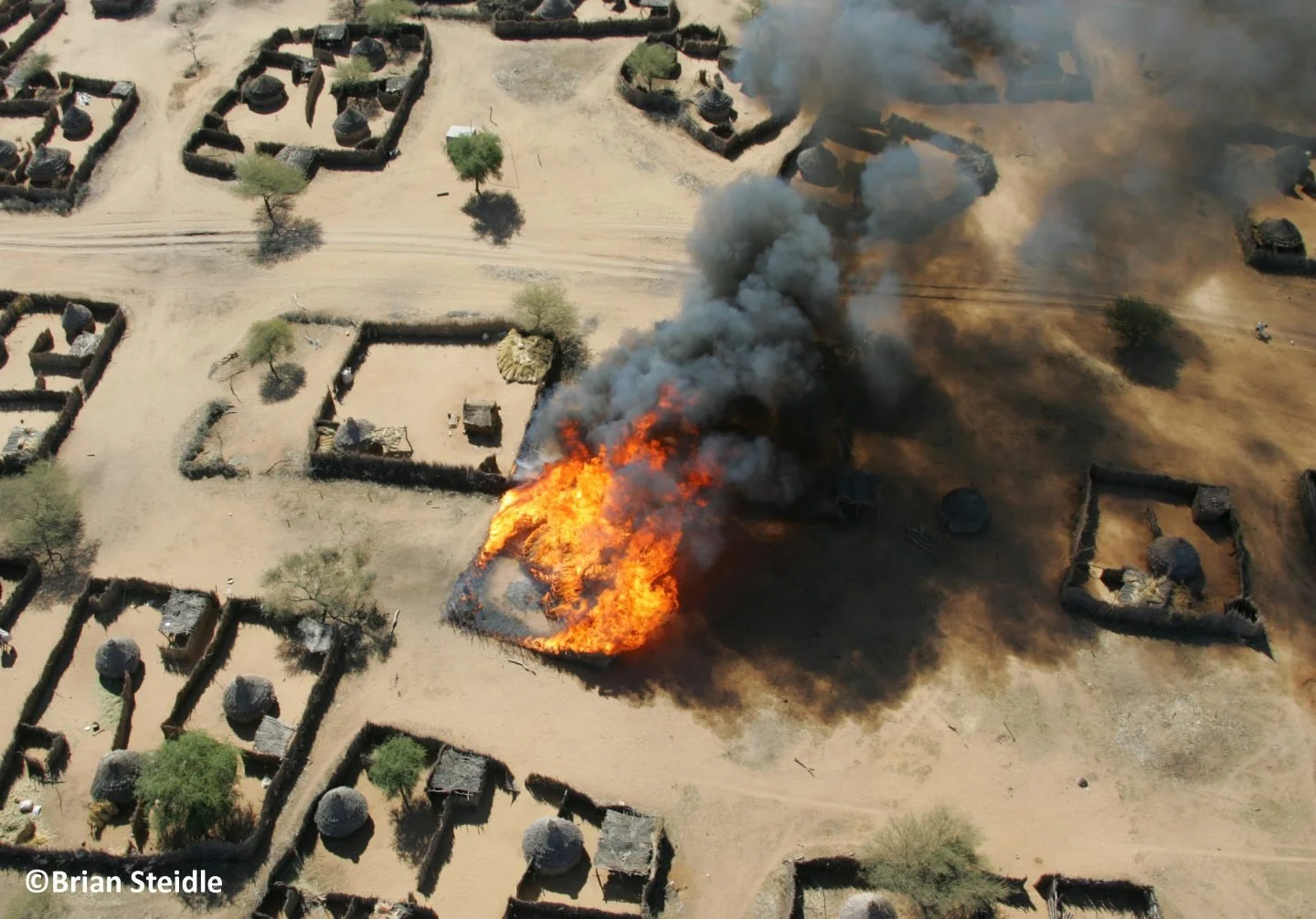
Hmd.org.uk. (2025). Holocaust Memorial Day Trust | Darfur: 2003 – 2005. [online] Available at:
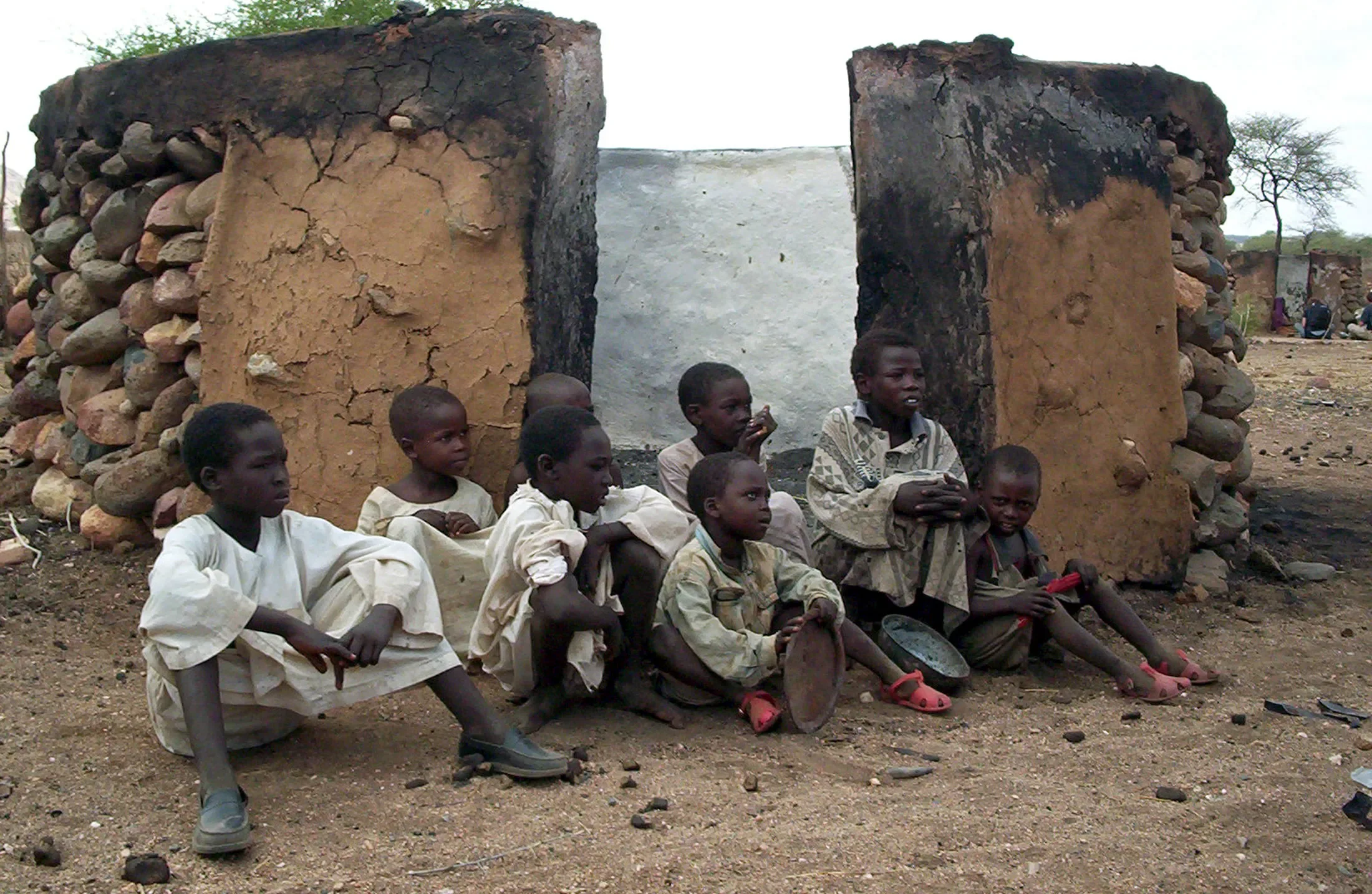
Sudanese children orphaned during attacks by Sudan government troops and the Janjaweed militia sit outside their home in Kidingir in southern Darfur
www.aljazeera.com. (2023). Photos: The lasting scars and pain of the war in Darfur. [online] Available at:
Omar al-Bashir and the ICC
In the context of widespread violence and instability, the massacres and atrocities committed in Darfur became associated with Sudan’s political leadership. Omar al-Bashir, who seized power in a military coup in 1989 and served as Sudan’s president during the conflicts in Darfur, was accused of orchestrating attacks on civilian populations through Sudan’s armed forces and the Janjaweed militias. Although Sudan was not a State Party of the International Criminal Court, which was established in 2002 under the Rome Statute, the scale of the atrocities in Darfur prompted international intervention. In March 2005, the United Nations Security Council referred the situation in Darfur to the ICC, which issued Omar al-Bashir with two arrest warrants issued in 2009 and 2010, making him the first head of state to be actively involved in the ICC.
Charges against Omar al-Bashir : what he is accused of
The charges against Omar al-Bashir were extensive and severe. The former president was accused of two counts of war crimes, five counts of crimes against humanity, and three counts of genocide. The ICC argued that he intentionally directed attacks against specific ethnic groups, involving acts such as murder, extermination, forcible displacement, torture, and rape. In addition, he was charged under the principle of command responsibility, which holds leaders legally accountable for crimes committed by subordinates when they knew, or should have known, and failed to prevent or punish such acts. This case was particularly significant as it tested the ICC’s ability to hold state leaders accountable, even while they remained in power.
Obstacles to Justice
Despite the gravity of the charges, bringing Omar al-Bashir to justice proved extremely difficult due to the lack of political support and insufficient international cooperation. Al Bashir never appeared voluntarily before the ICC, and many countries, such as China, Saudi Arabia, Kenya, and Egypt, refused to arrest him despite ICC warrants. The ICC was heavily criticized by the African Union and other states for disproportionately targeting African leaders, with some accusing the Court of political bias. Moreover, the ICC’s lack of independent enforcement mechanisms remains one of its great weaknesses. As a consequence, it relies entirely on member states to execute arrests and implement its decisions. This reliance highlights a fundamental limitation of international law.
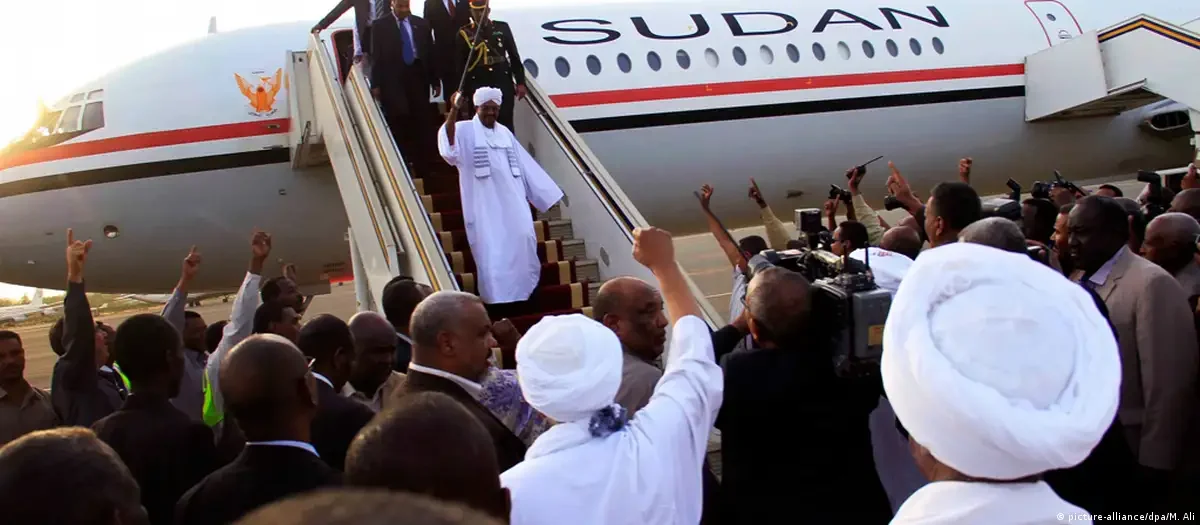
Omar al-Bashir reaches Khartoum after he fled South Africa, avoiding arrest, 2015
Welle, D. (2015). Omar al-Bashir reaches Sudan. [online] dw.com. Available at:
https://www.dw.com/en/sudans-omar-al-bashir-arrives-in-khartoum-to-triumphant-reception/a-18519098
Why this case matters : its significance regarding the international community
Nonetheless, the ICC’s case against Omar al-Bashir carried a significant symbolic weight. It demonstrated that international law can, in principle, hold state leaders accountable for their actions, thereby challenging the notion that heads of state are above the law. The case also drew international attention to the atrocities committed in Darfur and the suffering of civilian populations, reinforcing the idea that the international community could prevent and punish crimes against humanity. Following Omar al-Bashir’s removal from power in a military coup in 2019, discussions regarding his possible transfer to the ICC resumed, illustrating that accountability, though often delayed, remains possible.
Overall, the ICC’s case against Omar al-Bashir demonstrates that international courts can seek accountability for mass atrocities, but it also exposes the limits of international justice, particularly when political interests override legal obligations and enforcement mechanisms are weak. Although the ICC issues arrest warrants against a sitting head of state for some of the gravest international crimes, the inability to secure his arrest underscores the limits of legal authority in the absence of political support.
This case ultimately demonstrates that achieving accountability for atrocities such as those committed in Darfur requires not only strong legal frameworks but also genuine cooperation among states and sustained commitment from the international community. Whilst justice has not yet been fully achieved and Omar al-Bashir remains detained in a facility in Merowe, Sudan, the case continues to play an important role in advancing the principle that no leader should be immune from responsibility for war crimes and mass crimes.
Sources :
Ingham, K. (2019). Omar al-Bashir | Biography & Facts. In: Encyclopædia Britannica. [online] Available at: https://www.britannica.com/biography/Omar-Hassan-Ahmad-al-Bashir
Amnesty International. (2019). Pourquoi l’ancien président soudanais Omar El Béchir ne doit pas échapper à la justice. [online] Available at: https://www.amnesty.org/fr/latest/press-release/2019/04/why-former-sudan-president-omar-al-bashir-must-not-escape-justice/
Press, A. (2024). Sudan’s jailed former strongman Omar al-Bashir moved to better-equipped hospital. [online] Voice of America. Available at:
United States Holocaust Memorial Museum (2023). Darfur. [online] Ushmm.org. Available at:
https://encyclopedia.ushmm.org/content/en/article/darfur
the U. (2024). The Complex History of Sudan and South Sudan: A Brief Overview - Lift Up the
https://liftupthevulnerable.org/the-complex-history-of-sudan-and-south-sudan/
International Criminal Court (2019). Al Bashir Case. [online] Icc-cpi.int. Available at:
https://www.icc-cpi.int/darfur/albashir
Ali, M. (2025). Which countries are International Criminal Court members? [online] Al Jazeera. Available at: https://www.aljazeera.com/news/2025/4/8/which-countries-are-international-criminal-court-members
International Criminal Court (1993). President of the Republic of Sudan. [online] Available at:
https://www.icc-cpi.int/sites/default/files/CaseInformationSheets/AlBashirEng.pdf
White, T. (2018). States ‘failing to seize Sudan’s dictator despite genocide charge’. [online] the Guardian. Available at:
www.ushmm.org. (n.d.). Removal of President Omar al-Bashir and the Continued Pursuit of Justice - United States Holocaust Memorial Museum. [online] Available at:
https://www.ushmm.org/genocide-prevention/countries/sudan/removal-of-president-omar-al-bashir
www.coalitionfortheicc.org. (n.d.). Omar al-Bashir | Coalition for the International Criminal Court. [online] Available at:
https://www.coalitionfortheicc.org/cases/omar-albashir
Hmd.org.uk. (2025). Holocaust Memorial Day Trust | Darfur: 2003 – 2005. [online] Available at:
https://hmd.org.uk/learn-about-the-holocaust-and-genocides/darfur/
www.aljazeera.com. (2023). Photos: The lasting scars and pain of the war in Darfur. [online] Available at:
Welle, D. (2015). Omar al-Bashir reaches Sudan. [online] dw.com. Available at:
https://www.dw.com/en/sudans-omar-al-bashir-arrives-in-khartoum-to-triumphant-reception/a-18519098